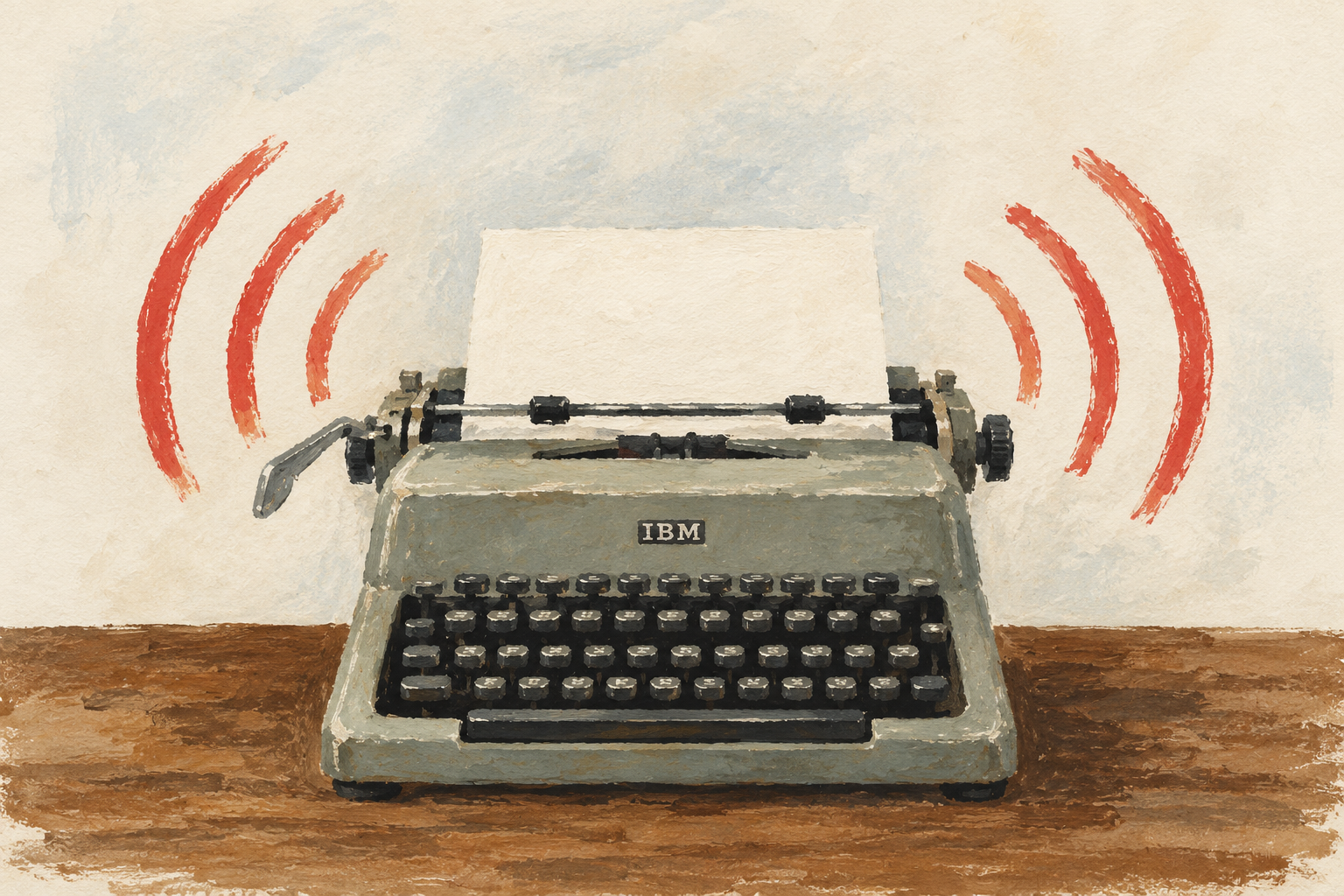
On the evening of July 23, 1984, an NSA technician examining a typewriter noticed an extra coil on its power switch. He decided to X-ray the whole machine.
The typewriter had come from American diplomatic facilities in the Soviet Union. It was part of a large collection of equipment being scrutinized for hidden surveillance devices. The X-rays revealed something worth dismantling much more carefully. The NSA's history identifies the discovery.
A metal bar that appeared to be an ordinary structural part contained electronics. Investigators eventually found sixteen bugged IBM typewriters.
The machines were helping the Soviets read what American staff typed.
The typewriter’s hidden signal
The letter existed as a movement first
IBM's Selectric printed using a small ball covered in characters. Pressing a key caused the ball to tilt and rotate, bringing the required character into position before striking the paper.
That replaced the crowd of individual type bars found in older machines. It also meant that each printed character depended on a particular combination of movements inside the mechanism. IBM describes how the Selectric chose and printed its characters.
The Soviet implant detected magnetic changes associated with those movements. The machine's character-selection process was producing information that sensors could collect. Electronics concealed in the bar converted that information into signals and transmitted it in short bursts.
An eavesdropper therefore had a route from the internal movements toward the written text. The page could remain inside the embassy. A later encrypted transmission could remain unreadable. The information had already escaped at the typing stage.
That timing was especially alarming because typewriters helped prepare diplomatic communications before those communications reached the equipment intended to protect their transmission. The State Department's security history describes the discovery as a threat to the preparation of embassy telegrams. Its account places the typewriters in the diplomatic workflow.
How much text could a movement reveal?
The implant didn't capture everything a typist did. According to the NSA's analysis, operations such as spaces and backspaces could be invisible when they didn't produce the monitored movement. There were also ambiguities in identifying characters.
That left the receiver with a reconstruction problem. A sequence of observations could fit more than one typed result.
Language helps narrow those possibilities. The letters MEETATNOON can be divided into recognizable words without a separate signal for each space. Other sequences may admit several plausible divisions. A correction made with the backspace key can produce a still more confusing record if the observer sees the new letter but misses the instruction to replace an earlier one.
Those examples show why the usefulness of a leak depends on the surrounding information. A partial observation can become much more informative when neighboring characters, likely words, and the subject of a document constrain its interpretation.
NSA analysts used probability to investigate how the Soviets could recover text from the ambiguous signals. The agency's history describes the result as a valuable source of information despite its limitations.
The leak exploited a necessary relationship in the typewriter: selecting a character caused internal parts to move in a corresponding way. The additional problem for the receiver was deciding which text best explained the observed sequence.
A warning from another embassy
The search had begun after French intelligence warned American officials about a sophisticated Soviet device found in French equipment. The United States quietly replaced and removed large quantities of its own information-processing machinery. Operation GUNMAN gave specialists equipment they could examine away from the facilities in which the devices had operated.
The discovery also forced a reassessment of Soviet technical capabilities. The concealment, intermittent transmission, and integration with the typewriter had helped the bugs survive ordinary inspection. A separate declassified NSA history includes photographs of the bar assembled and opened, with its electronics exposed. The historical record preserves the hardware.
Investigators then had to work backward through equipment records to assess the exposure. The typewriters had been used over years; finding the device couldn't recover every document that might have passed through it.
The extra coil was a clue to a second communications system inside a familiar office machine. Pressing a key made a mark on the paper and a set of movements under the cover. The Soviets had arranged to receive the movements.